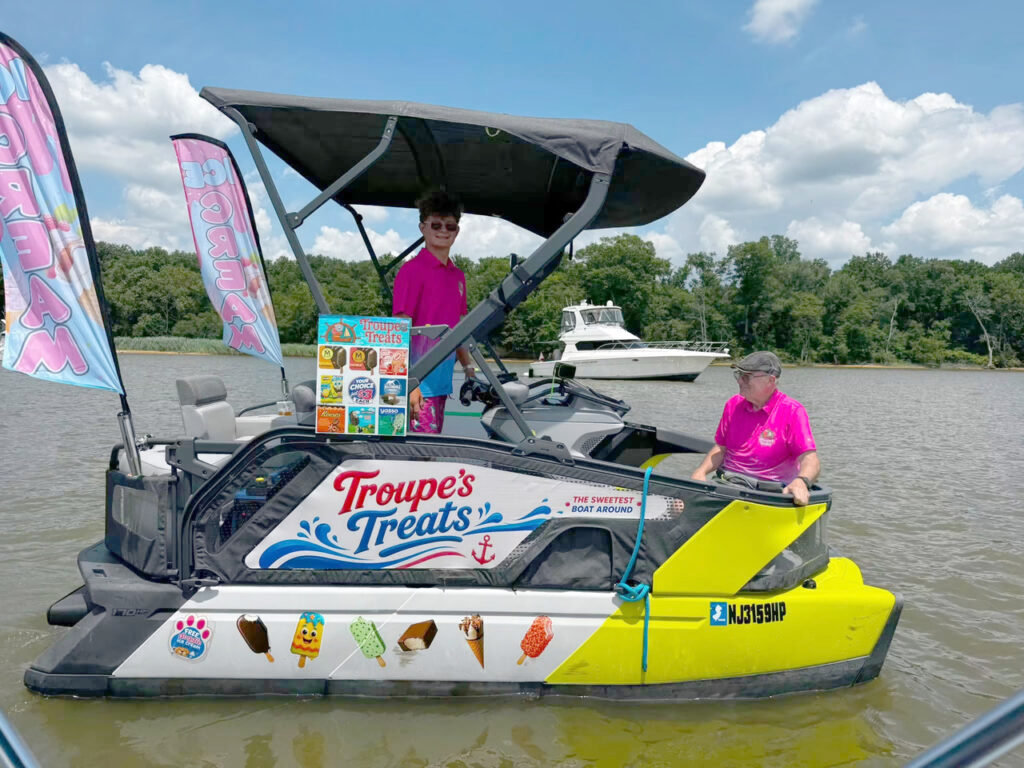
The music is faint at first, just enough for a few children floating on inflatable rafts to stop splashing and listen. One of them looks toward the bridge near Bohemia Manor Farms’ Augie’s Beach, where the bridge and shoreline partially hide what is approaching from the other side. Another scrambles onto the swim platform of their family boat for a better view. Then the boat emerges.
Within seconds, the familiar cry echoes across the anchorage. “It’s the ice cream boat!“
The words travel from boat to boat faster than the music itself. Parents reach for their wallets. A Labrador standing at the edge of a swim platform begins wagging excitedly. Two boys debate whether they are getting SpongeBob bars or Strawberry Shortcake bars. “Mom! Mom! He’s here!“
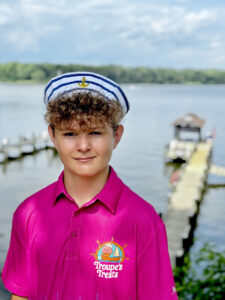
By the time 16-year-old Brian Troupe eases alongside the first group of anchored families, the hardest part of his job is no longer finding customers. It’s deciding who to visit first.
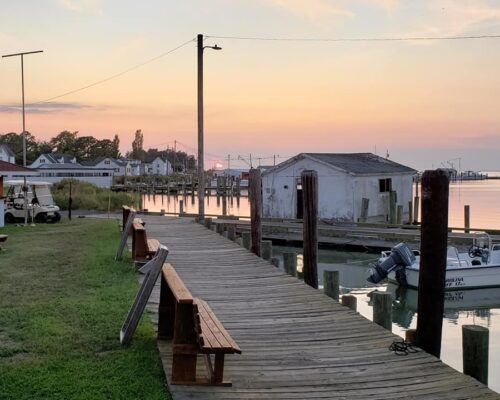
On Maryland’s Bohemia River, part of the Chesapeake Bay watershed located in Cecil County, scenes like this now play out throughout the summer.
The Chesapeake has always been a place where people make a living from the water. For generations, workboats have left sheltered creeks before sunrise to harvest blue crabs, tong oysters, haul fish, and carry goods between waterfront communities. Their cargo helped define both the economy and culture of the Bay. Entire families built their lives around providing something people wanted from the water.
Troupe’s cargo is different. His freezer is stocked with pre-packaged frozen ice creams. Yet in its own small way, his work belongs to that same Chesapeake tradition. Instead of bringing blue crabs or oysters ashore, Brian brings something people eagerly await on a hot summer afternoon. Ice cream.
Troupe discovered the Bohemia River while spending time with family friends and quickly became fascinated by the atmosphere surrounding it. People waved to passing boats they had never seen before. Families anchored together and spent entire afternoons swimming, talking, sharing food, and meeting new friends. Children moved effortlessly from one swim platform to another, as though the river itself were a floating neighborhood.
He also heard stories about Bohemia Bites, an earlier food boat that had served river boaters years before. The idea of bringing food directly to people on the water stayed with him.
Troupe began paying attention the way an engineer studies a problem. Rather than focusing on what people were doing, he became interested in what they weren’t doing, and why. He noticed families arriving early with coolers packed for the day. They had sandwiches, drinks, chips, and snacks. They had planned for almost everything.
But there was one thing almost nobody brought. Ice cream.
“Everybody likes ice cream, but it’s really hard to keep frozen when you’re spending all day on a boat,” says Troupe.
Brian’s first attempt didn’t involve a boat at all. Using money he had saved himself, he purchased a commercial freezer, filled it with individually wrapped frozen treats, and placed it at the end of a dock.
The reasoning seemed perfectly logical. Boaters were nearby. The weather was hot. Ice cream was difficult to keep aboard. Surely people would come. They didn’t.
Families remained anchored offshore. Parents didn’t want to pull anchor, maneuver back toward shore, unload children, and interrupt an afternoon on the water simply to buy a frozen treat. Brian waited beside a fully stocked freezer while the customers he hoped to serve remained tantalizingly out of reach. “I was very frustrated and depressed,” Troupe says. “I’d spent my own money, and nobody came.” Looking back, he smiles. “It seems obvious now. Nobody wanted to leave a perfect day on the river just to come buy ice cream.”
“If they aren’t coming to me,” Troupe remembers thinking, “I’ll go to them.” That realization changed everything.
Troupe purchased a small plastic jon boat and mounted the freezer aboard it. The boat wasn’t impressive. It didn’t need to be. It simply solved the problem the dock never could.
Rather than asking customers to leave the experience they were enjoying, Troupe became part of it. He began cruising slowly through the anchorages while music announced his arrival.
He still remembers returning to his dock after one of those early afternoons with an empty freezer. “The first time I sold out,” Troupe says, “I realized this could actually work.” It wasn’t simply because the freezer was empty. It was because people were smiling before they even reached the boat.”
Brian’s menu is limited to eight carefully curated selections rather than an oversized assortment. Each earns its place in the freezer: colorful SpongeBob character bars appeal to children, familiar Good Humor favorites offer nostalgia, premium Magnum and Ben & Jerry’s products give adults a more indulgent option, Reese’s cones provide a recognizable crowd-pleaser, and Yasso bars offer a lighter alternative. He even carries frozen treats for dogs. The selection is broad enough to serve different ages and tastes, but compact enough for Brian to stock efficiently, maintain inventory aboard a small boat, and help customers choose quickly while two vessels are moving on the water.
Selling from one boat to another also requires its own kind of choreography. Boats rarely remain perfectly still. Wind pushes them. Currents shift them. One family drifts forward while another eases away. Children lean excitedly over swim platforms while parents balance towels, drinks, and wallets.
Passing a melting ice cream bar across several feet of moving water is harder than it looks. Brian’s solution is elegantly simple. A landing net. Rather than asking customers to stretch between boats, he places the ice cream inside the net and extends it across the gap. Moments later, the same net returns carrying damp dollar bills, credit cards, or a cheerful thank-you.
Few people have had a better vantage point to watch the Upper Bay boating community evolve than Jonny Towers. Through years of organizing boating events and building one of the region’s largest online boating communities, he has watched traditions come and go, businesses succeed and disappear, and countless people become part of life on the water.
When asked about Troupe, he says, “Brian didn’t just bring ice cream to the river—he became part of it.”